
One of the most common objections to Reparations for slavery is that Black people are unable to trace their lineage to an enslaved person in the U.S. By showing that it can be done, and can be done quickly and affordably, we are debunking this objection. Additionally, our program evaluates how participants experience healing from connecting with known and unknown parts of their family history, and helps place Black Americans at the center of the founding and establishment of the United States.
Grounded in the UN principle of satisfaction and restitution, Reparation Generation’s (RepGen) Restorative Genealogy Program provides participants with a healing-centered journey into their family history, illuminating through genealogical records and U.S. history a direct link for the individual to their descendants. This program intentionally centers Black American descendants of enslaved people as founders and builders of this country to restore the participant’s sense of belonging and ownership of the American story.
The program provides:
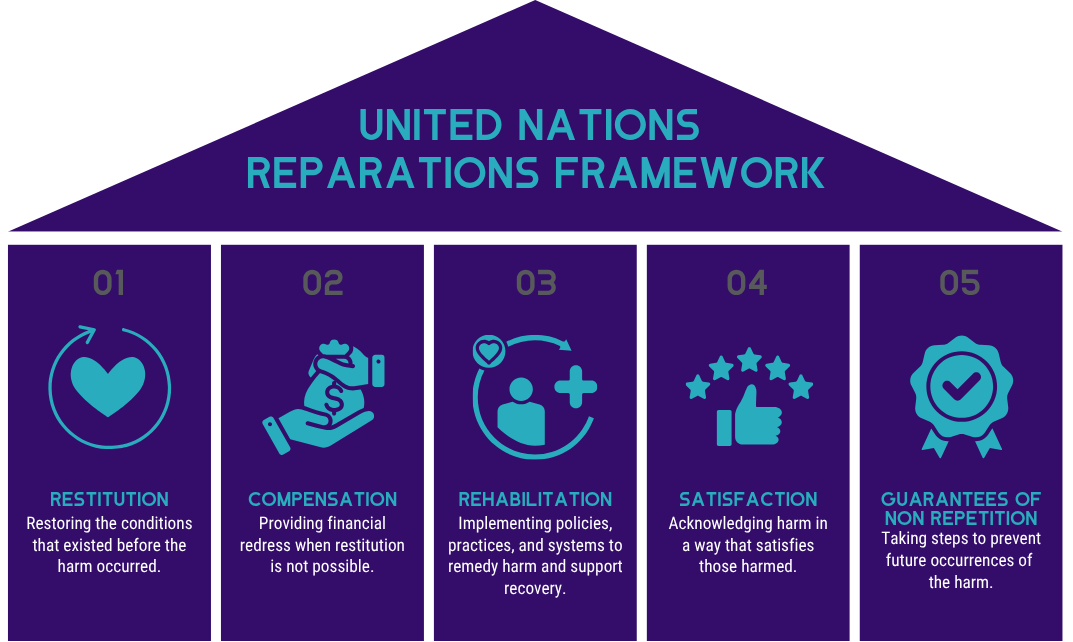
The Restorative Genealogy Program is intended to provide answers to common objections to Reparations programs and provide empirical lessons for what a Federal Reparations Program might look like. One of the most common objections to Reparations for slavery is that Black people are unable to trace their lineage to an enslaved person in the U.S. By showing that it can be done, and can be done quickly and affordably, we are debunking this objection. Additionally, our program evaluates how participants experience healing from connecting with known and unknown parts of their family history and helps place Black Americans at the center of the founding and establishment of the United States. This program exemplifies that non-compensatory forms of repair must be part of any comprehensive Reparations plan. Our findings are shared with policymakers and Reparations advocates to bolster the case for federal reparative programming.
Our Restorative Genealogy program has historically been embedded in RepGen’s HORT Program. RepGen’s Restorative Genealogist meets with HORT participants and takes them through a genealogical process that will document evidence of their standing within the harmed class of Black American descendants of people who were enslaved in the US.
Through these Restorative Genealogy consultations, each participant must be able to evidence that they have at least one of the following:
*Prior to 1960, the number of Black people in the United States that did not descend from people enslaved within the United States was below 1%.
This free, professional support often provides access to unknown, untold family history that was lost, stolen, or previously inaccessible. Following the meetings, the Restorative Genealogist produces a comprehensive Research Journal that includes a narrative description of findings and official sources, meeting the recognized, evidentiary standard of genealogical proof.
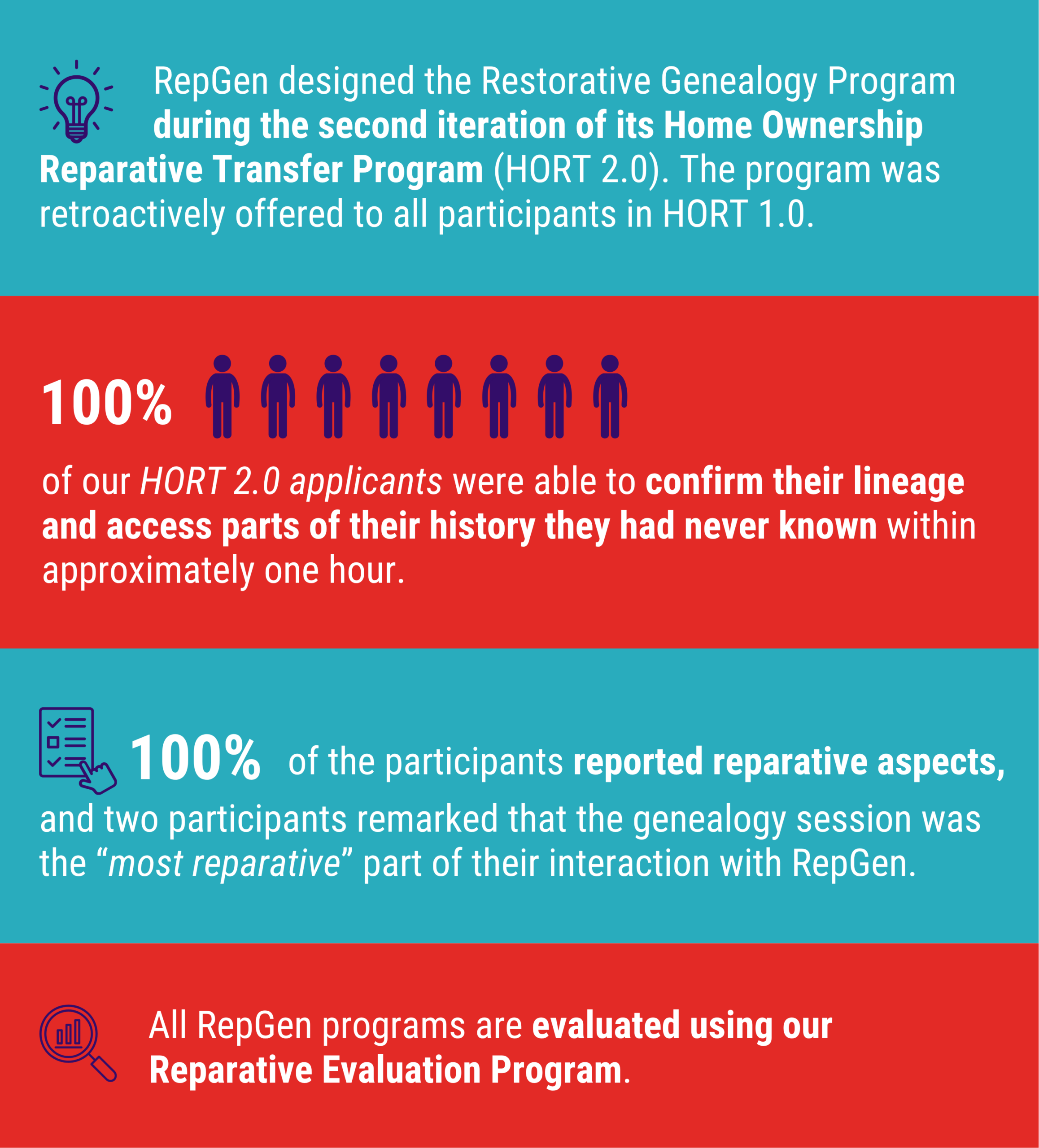
Based on the findings shared by participants exemplifying the reparative benefits of the program, RepGen intends to create a stand-alone Restorative Genealogy Program that can be deployed with strategic partners.
It is our belief that connecting with family history will lead to more engaged citizens who feel a new sense of ownership in the American story. We are currently pursuing funding to launch this program in 2026-2027.
Sign up for updates via the RepGen Newsletter or contribute today.